Home · Sleep Science · Narcolepsy
Narcolepsy
A chronic neurological disorder causing intense daytime sleepiness and sudden sleep attacks; in type 1, strong emotions can trigger cataplexy, a sudden loss of muscle tone. Frequently undiagnosed for years.
Last revision: 19.07.2026
| 19.07.2026 | OG image redrawn in the series style |
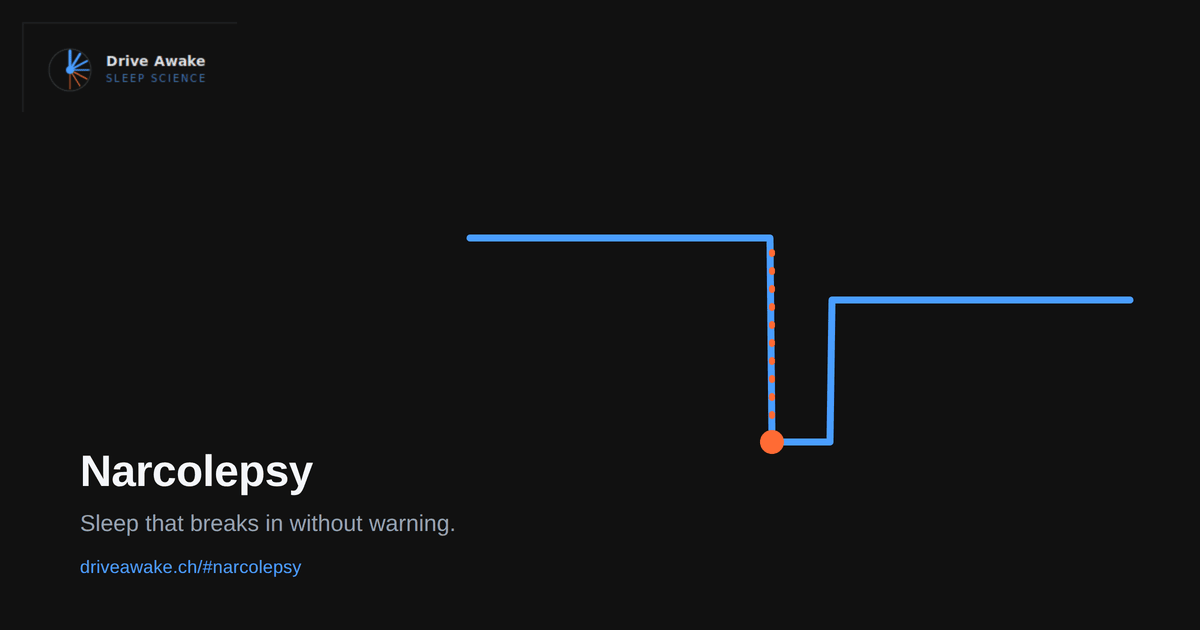
The form with cataplexy affects 2.5 to 5 people in 10,000 (Longstreth 2007). Diagnosis often comes only after years. People with narcolepsy have a higher crash risk, which long-term treatment can reduce (Pizza 2015).
Narcolepsy type 1 is caused by the loss of hypocretin-producing neurons in the hypothalamus - likely due to an autoimmune process. Hypocretin regulates wakefulness and REM sleep. Without it, the brain cannot maintain stable wakefulness, and REM sleep intrudes into consciousness at unpredictable moments.
A narcoleptic driver may fall asleep suddenly during normal driving, with no warning. Cataplexy - sudden muscle weakness triggered by emotion - can cause loss of vehicle control. Most countries require medical clearance for narcoleptic drivers.
Drive Awake includes narcolepsy in its scientific scope - a condition that makes visible, in extreme form, what sleepiness at the wheel means for everyone: the loss of the boundary between sleep and wakefulness.